
M12 Circular Connector Maintenance Tips: Practical Methods to Extend Service Life
In core application scenarios such as industrial automation, intelligent manufacturing and rail transit, M12 circular connectors serve as a critical connection hub for sensors, actuators and industrial Ethernet systems with their compact structure, high protection rating and stable transmission performance. As the "nerve node" for equipment signal and power transmission, the health condition of connectors directly affects the operational reliability of the entire production line.
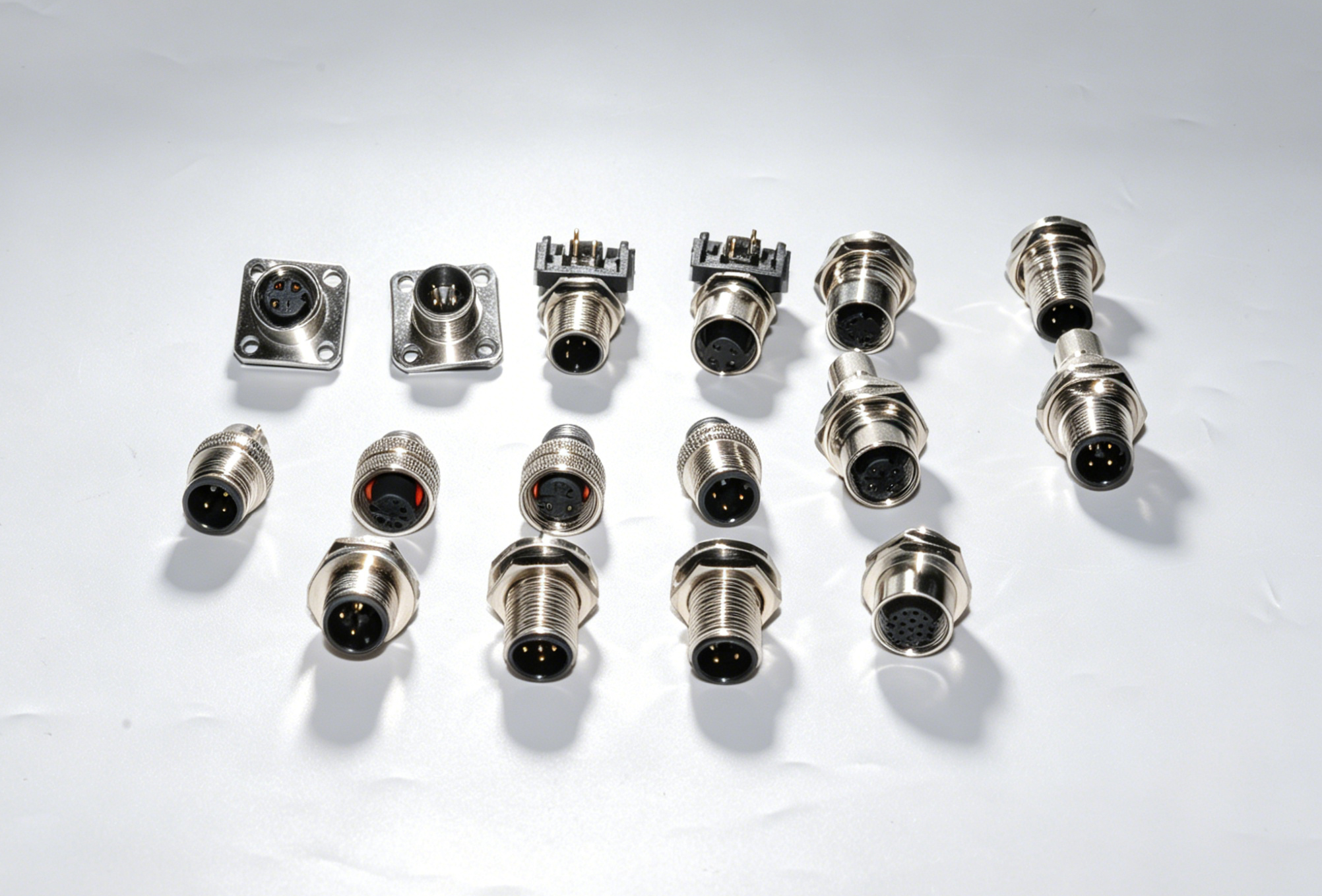
Octopusconn M12 series connectors are built on industrial-grade design standards, featuring inherent performance including IP67 waterproof and dustproof, vibration resistance, and high/low temperature tolerance. They also support multiple keying specifications such as A-coded and D-coded designs, and are compatible with mainstream industrial protocols including PROFINET and EtherCAT. Even with high-quality components, scientific daily maintenance remains the core approach to extend product service life and reduce unexpected downtime risks.
1. Daily Inspection: Establish a Preventive Maintenance Mechanism
Preventive maintenance is the most cost-effective way to extend connector service life. Regular inspections allow timely intervention at the early stage of faults, preventing minor issues from escalating into equipment shutdowns.
1.1 Appearance Integrity Check
During routine equipment maintenance, perform a visual inspection of M12 connectors, focusing on three key areas:
- Housing and threads : Check the metal housing for cracks, dents or rust, and verify whether the thread profile is intact with no slipping or chipping. Thread damage will directly reduce locking force and further impair sealing performance.
- Cable tail : Inspect the junction between the cable and connector tail for outer jacket cracking, core exposure or tensile deformation. Cables under sustained tension are prone to hidden internal core breakage.
- Mating end face : After disconnection, check pins and sockets for bending, pin withdrawal or foreign matter accumulation, and see if dust or metal debris has built up in the end face sealing groove.
1.2 Connection Status Check
For connectors in long-term mated state, confirm the following:
- Threads are fully locked with no loosening or backing out;
- Keying positions are accurately aligned with no traces of forced misaligned insertion;
- Shielding connection structures are in tight contact with no loosening or lifting.
2. Cleaning & Maintenance: Keep Contacts and Sealing Surfaces Clean
Dust, oil and moisture on industrial sites are the main causes of connector performance degradation. Standardized cleaning operations can effectively maintain contact conductivity and sealing reliability.
2.1 Contact Cleaning Specifications
Contact cleaning must be performed under a fully powered-off state to avoid short-circuit risks:
- Use a lint-free soft cloth or cotton swab dipped in high-purity anhydrous isopropyl alcohol to gently wipe pin and socket inner walls, removing surface oxide layers and oil stains;
- Never use hard objects such as sandpaper or blades to scrape contacts, as this will damage the plating and accelerate oxidation;
- Wait for the solvent to fully evaporate and dry after cleaning, and confirm no residual fibers before mating the connector.
2.2 Sealing Surface and Thread Maintenance
Sealing performance is the foundation for the IP67 protection rating to function properly. Pay attention to the following during maintenance:
- Remove hard particles such as dust and iron filings from the sealing groove and sealing ring surface, to avoid permanent indentation caused by particles pressing into the ring;
- Apply a small amount of silicone-based grease to the threads, which facilitates screwing and prevents thread rust and seizing;
- Avoid contact between the sealing ring and strong acids, strong alkalis or organic solvents, to prevent premature aging and failure of the rubber material.
3. Proper Operation: Reduce Plugging and Installation Damage
Improper plugging and wiring are the leading causes of mechanical damage to connectors, and many early failures are directly related to incorrect operation.
3.1 Plugging and Unplugging Guidelines
- Align before insertion : Confirm the alignment of the key and groove before mating, insert smoothly along the axial direction. Never insert forcibly at an angle or probe blindly by rotating, to prevent pin bending and deformation;
- Moderate locking : Tighten the threads until they seat against the end face. Do not over-tighten with tools, as excessive locking will cause thread fatigue and permanent compression deformation of the sealing ring;
- No cable pulling for unplugging : Hold the connector body and rotate to withdraw when disconnecting. Never pull the cable directly to unplug, as this may loosen internal solder joints or crimp connections under tension.
3.2 Wiring and Installation Precautions
- The cable bending radius shall not be less than 8 times the cable diameter. Long-term small-angle bending will cause fatigue fracture of wire cores;
- Reserve sufficient cable slack for connectors on moving equipment, to avoid sustained tension on the connector during equipment operation;
- Route cables away from heat sources, vibration sources and corrosive gas areas as much as possible, to reduce environmental stress erosion on the connector.
4. Protection Maintenance: Ensure IP67 Protection Performance
Octopusconn M12 connectors comply with ENstandard and achieve IP67 protection rating, capable of withstanding short-term immersion in 1 meter of water for 30 minutes without water ingress. However, protection capability relies on an intact sealing structure, making regular sealing system maintenance essential.
4.1 Sealing Ring Condition Inspection
The sealing ring is the core barrier for waterproof and dustproof performance. Quarterly inspection is recommended, with increased frequency in harsh environments:
- Check the sealing ring for aging signs such as cracking, hardening, stickiness or permanent deformation;
- Confirm the sealing ring is fully seated in the sealing groove with no twisting or dislodgement;
- Replace with a matching spare part promptly if the sealing ring shows obvious aging or damage. Never substitute with sealing rings of incorrect dimensions.
4.2 Protection Focus for Different Environments
- High humidity and rainy environments : Regularly check for condensation or water accumulation inside the connector, keep drain holes unobstructed; dry thoroughly before re-energizing after long-term shutdown;
- Dusty industrial environments : Increase end face cleaning frequency to prevent long-term dust buildup in sealing surface gaps;
- High-low temperature alternating environments : Avoid plugging and unplugging operations during drastic temperature changes. The sealing ring elasticity fluctuates at such times, and forced mating may cause sealing failure.
5. Regular Testing: Predict Potential Failure Risks
For M12 connectors on critical equipment, performance testing is recommended in conjunction with equipment overhaul cycles to quantitatively assess connector health status.
5.1 Electrical Performance Testing
- Contact resistance : Measure single-pin contact resistance with a milliohm meter. Normal values are at the milliohm level. A significant increase in resistance indicates contact oxidation or poor crimping;
- Insulation resistance : Test insulation performance between adjacent contacts and between contacts and the housing. A drop in insulation resistance may indicate moisture or contamination;
- Shielding continuity : For shielded connectors, confirm good continuity of shielding layers at both ends to prevent electromagnetic interference from degrading signal transmission quality.
5.2 Mechanical Performance Testing
- Sense changes in insertion and withdrawal force. Abnormally increased or decreased mating force may indicate structural wear;
- Check the tensile strength of the crimped/soldered joint between the cable and connector, and address any loosening risks promptly.
6. Common Fault Troubleshooting and Solutions
6.1 Poor Contact, Intermittent Signal
Common causes : Contact surface oxidation, foreign matter in the contact area, slight pin deformation, broken wire core at the cable root;
Solutions : Clean the contacts and straighten deformed pins; for cable root damage, re-crimping or connector replacement is recommended.
6.2 Protection Failure, Internal Water/Dust Ingress
Common causes : Aged or dislodged sealing ring, unlocked threads, cracked housing, sealing surface damage from forced insertion;
Solutions : Dry and clean the interior, replace damaged sealing rings, repair or replace cracked housings; resume use in harsh environments only after confirming the sealing structure is intact.
6.3 Unstable Data Transmission, High Bit Error Rate
Common causes : Poor shielding contact, disconnected grounding, adjacent strong current interference;
Solutions : Check shielding connection reliability, confirm normal grounding circuit, and adjust wiring away from interference sources if necessary.
A scientific maintenance system enables M12 connectors to maintain stable and reliable connection performance throughout their entire life cycle, maximizing their industrial-grade design advantages. All Octopusconn M12 series circular connectors have passed international certifications including CE-LVD and FCC, ensuring product reliability and durability from the design stage. Combined with standardized daily maintenance, they can effectively reduce equipment operation and maintenance costs and improve the overall operational stability of industrial systems.
For more technical parameters of M12 series products or customized connection solutions, please visit the official Octopusconn website: https://www.octopusconn.cn/ for detailed product information and technical support.
 telephone
 Contact US