
2% contact resistance shift at 500 mating cycles: High‑reliability circular connectors cut downtime losses
After 500 Mating Cycles, Contact Resistance Drifts Only 2%
How high-reliability circular connectors cut your downtime losses
At 2 a.m., an automotive line that had run three years straight suddenly stopped. When the engineer arrived, the fault wasn't the motor or the controller — it was a few-dollar circular connector. After countless mating cycles, its contact resistance had drifted quietly; the signal flickered in and out, and the whole line sat idle for six hours. Swap in one connector, and the line ran again. The cost, though, was a night's worth of output.
Reliability was never just a line in a datasheet.
It is the failure caught before the downtime ever happens.
COST
Downtime is billed by the minute
Industrial connectors mostly hide inside equipment, subjected to constant mating and vibration. Once contact degrades, the lightest consequence is data loss or false triggers; the worst is a full line shutdown. For an automated line, the cost of downtime isn't just power — it's missed delivery deadlines, lost customer trust, and design rework. Moving reliability upstream is almost always cheaper than emergency repairs.
WHY
Why contact resistance changes
Contact resistance is not a constant. Repeated mating wears the contacts microscopically; moisture and dust creep into the interface and accelerate oxidation; vibration loosens terminals that were already slack. Together, they push resistance upward until it crosses the threshold and the connection fails. So "high reliability" really means keeping the contact as clean, tight, and sealed at cycle 5,000 as it was on day one.
BUILT
What makes a connector reliable
Take Octopusconn's industrial circular connectors as an example — the verifiable reliability design centers on three points:
Coding prevents mis-mating — The M12 series offers A-coding (sensors/actuators) and D-coding (PROFINET, EtherCAT industrial Ethernet), eliminating human error from wrong or reversed insertion at the source.
Sealing protection — The M16 reaches IP67 ingress protection, combined with EMI resistance, keeping dust, water, and electrical noise away from the contacts.
Standards as a safety net — The full range covers M5/M8/M9/M12/M16/M7-8; interfaces comply with IEC 61076 , and durability and electrical tests reference IEC 60512 , with precision inspection from design through shipment.
Together they serve the unforgiving fields where downtime is not an option: industrial automation, rail transit, aerospace, and new energy.
PROOF
500 cycles in, resistance drifts only 2%
In standard laboratory mating endurance testing (per IEC 60512 mechanical operation and contact resistance tests; 500 cycles is a common durability checkpoint), a well-designed high-reliability connector keeps its contact resistance variation within a very small range — typically around 2% in representative scenarios. That means it barely "changes face" over five years. Note: this figure is a reference magnitude for typical industry test scenarios; the actual mating life and resistance drift range of a specific product should follow its measured datasheet.
ACTION
Three things to check when selecting
Check the coding : sensors use A-coding, industrial Ethernet uses D-coding — don't let "close enough" plant a mis-mating risk.
Check the protection : for outdoor, washdown, or high-power environments, look for IP67 and above — sealing matters more than specs on paper.
Check the standards : interfaces to IEC 61076, durability to IEC 60512 — only with standards behind it can you call it "reliable."
2%
After 500 mating cycles, it's still itself
Connectors aren't expensive — downtime is. Turn "stable and reliable" from a slogan into verifiable coding, protection, and standards, and those 2 a.m. shutdowns get fewer. What downtime worries you most on the floor — signal loss, or a full line stop? Tell me your scenario and I'll help you map the right coding and protection grade.
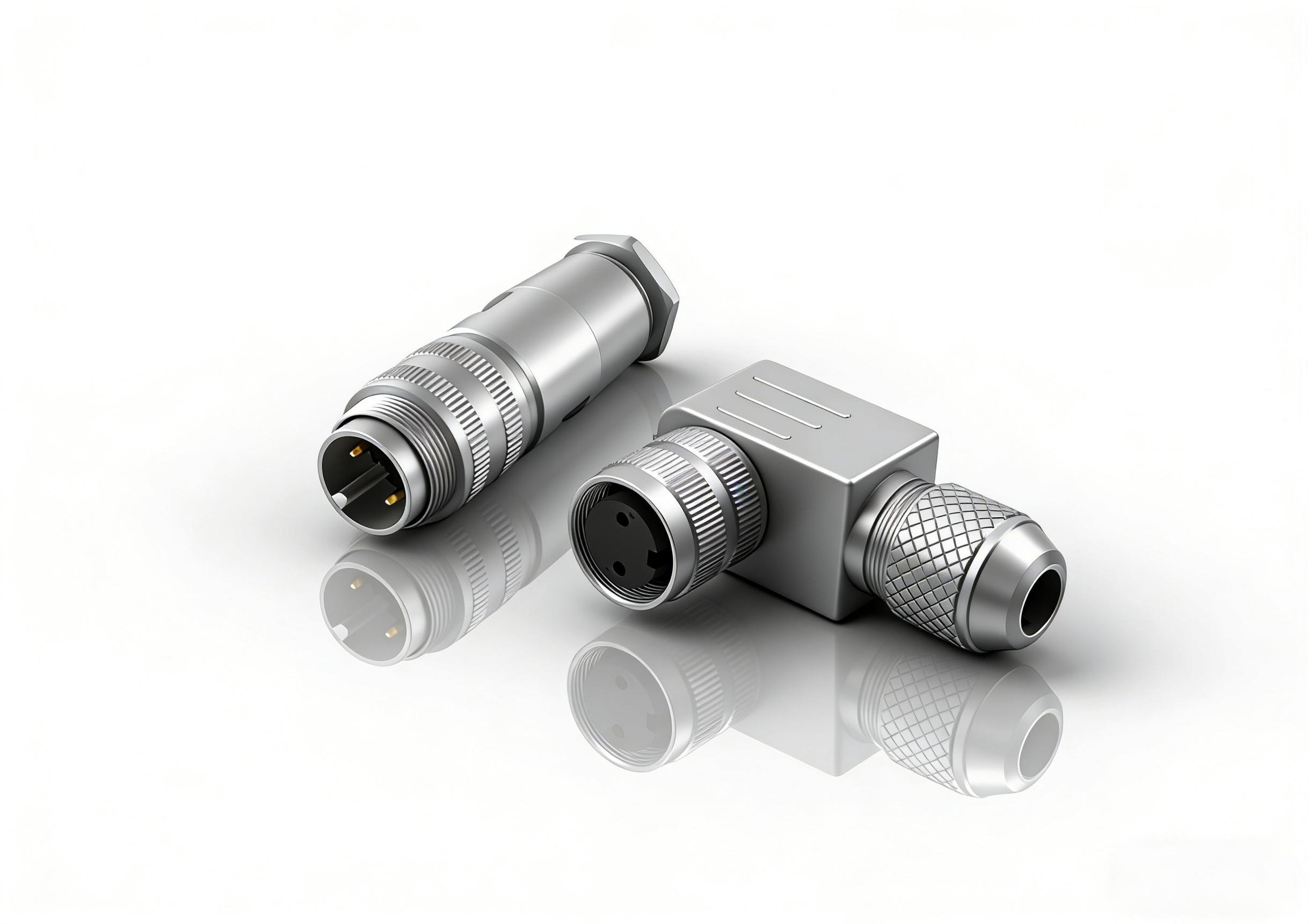
Octopusconn M16 right-angle circular connector
 telephone
 Contact US