
OEM vs ODM: Which Model Is Suitable for M16 Circular Connector Procurement?
In the procurement decision-making of industrial connectors, the choice between OEM and ODM models directly impacts project cost, delivery cycle and product adaptability. Especially for core components like M16 circular connectors, which are widely used in automation equipment, new energy and rail transit, selecting the right cooperation model can not only improve supply chain efficiency, but also ensure the long-term stable operation of terminal equipment.
1. Clarification: Core Differences Between OEM and ODM
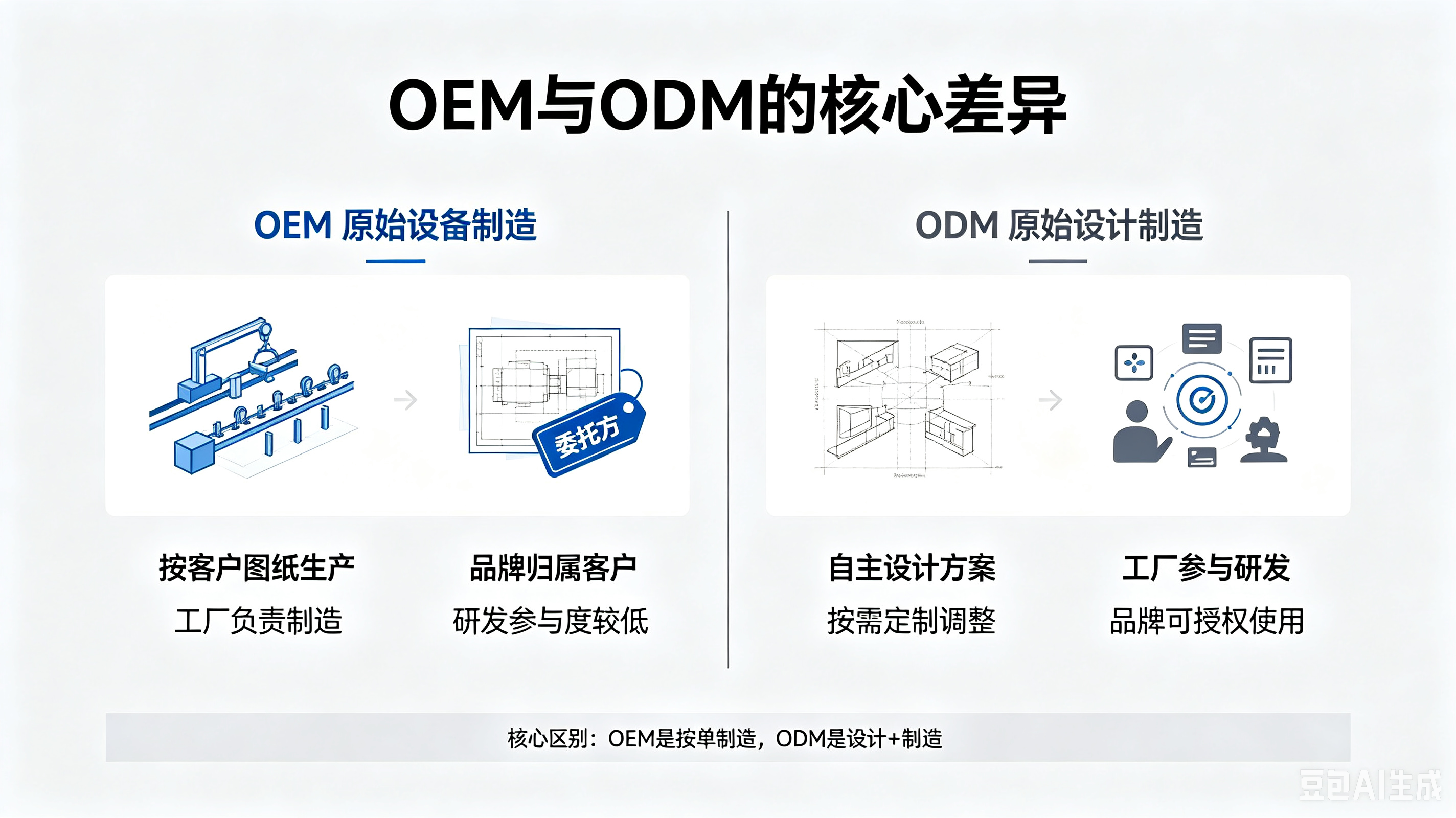
Many purchasers tend to confuse the two models. They are essentially different in terms of property right ownership, R&D participation and flexibility:
1.1 OEM (Original Equipment Manufacturing)
OEM refers to contract manufacturing. The core logic is that the purchaser provides complete design schemes and technical requirements, and the factory is only responsible for production and manufacturing . The intellectual property rights of the products belong to the purchaser. The factory processes and assembles according to the established drawings and specifications, and delivers products labeled with the purchaser's brand.
The essence of this model is "you design, we produce". The factory mainly provides production capacity and manufacturing process capability, and does not participate in front-end R&D.
1.2 ODM (Original Design Manufacturing)
ODM is an integrated service of design and manufacturing. The factory makes customized adjustments according to the purchaser's needs based on its own mature technical solutions and product platforms , including structural modification, pin definition, cable selection, protection grade upgrade, etc. The design scheme usually belongs to the factory, and the purchaser can choose buyout or authorized use.
The essence of this model is "we design, we produce, you brand". The factory provides both R&D capability and manufacturing capability.
2. Advantages and Disadvantages of the Two Models for M16 Connector Procurement
M16 circular connectors are industrial standard parts, but installation space, wiring methods and environmental tolerance vary greatly across different industries. Combined with product characteristics, the two models have their own adaptability:
OEM Model
Advantages
- Full independent intellectual property rights with controllable core technology
- Highly customized product specifications matching equipment parameters
- Strong brand independence, not affected by supplier's product planning
Limitations
- High upfront R&D investment, requiring in-house design capability
- Long mold opening and verification cycle, slow mass production launch
- High cost for small batches, with self-borne trial and error risks
ODM Model
Advantages
- Low R&D cost, no extra mold opening expense
- Short delivery cycle, supported by inventory for fast shipment
- Low technical risk with full set of factory verification completed
- Low MOQ threshold, suitable for small and medium batches
Limitations
- Design scheme belongs to the factory, with limited differentiation
- Deep customization constrained by existing product platforms
- Product iteration requires coordination with factory R&D rhythm
3. Decision Framework: Which Model Fits Your M16 Procurement
The core of selection does not lie in the superiority of the model itself, but in its matching degree with your own needs. Judgment can be made from the following four dimensions:
Dimension 1: Depth of Product Customization
For conventional requirements such as pin definition adjustment, cable length change and protection grade upgrade, the ODM model offers the highest cost performance. For deep customization involving shell structure remodeling, special material application and integrated sensing functions, with long-term mass production planning, the OEM model has more long-term value.
Dimension 2: Project Time Cycle
For scenarios such as new product launch rush, emergency equipment replenishment and rapid prototype verification, ODM is preferred. For projects with sufficient cycle, complete R&D schedule and long-term mass production plans, OEM can be considered.
Dimension 3: Batch Scale
For small and medium batches with annual purchase volume below 10,000 pieces, ODM has lower comprehensive cost. For annual purchase of more than 100,000 pieces with product life cycle over 3 years, the scale effect of the OEM model will gradually appear.
Dimension 4: In-house Technical Reserve
Enterprises without a professional connector R&D team and lack of mold and process experience are not recommended to force OEM, which may easily lead to pitfalls in structural design, sealing failure and unreliable performance. Large equipment manufacturers with mature R&D teams can choose OEM combined with core technology protection needs.
4. Octopusconn M16 Connection Solutions
As a manufacturer deeply engaged in industrial circular connectors, Octopusconn supports both OEM and ODM cooperation models. With over 10 years of industry experience and a complete R&D and manufacturing system, it provides adaptive solutions for customers with different needs.
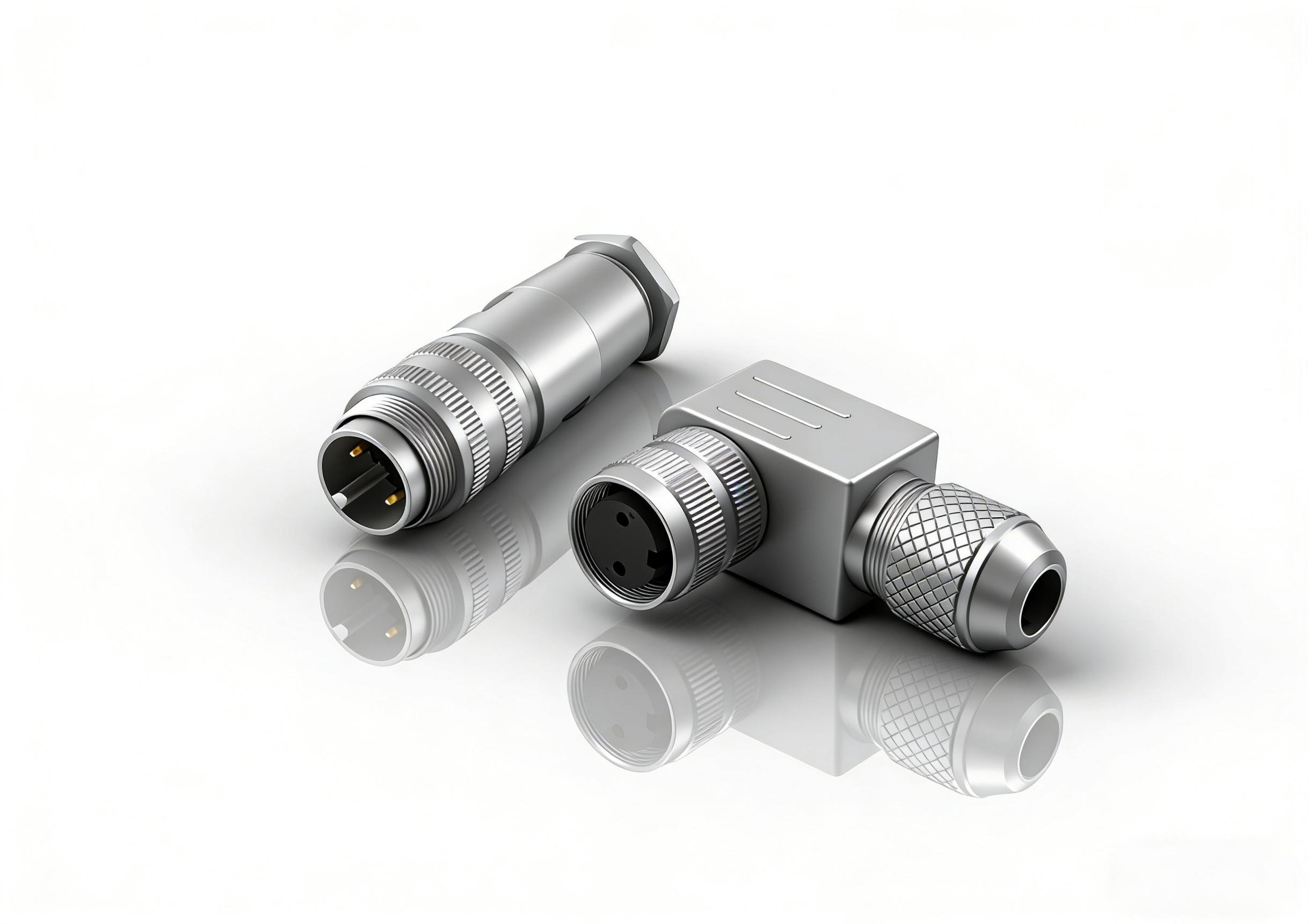
On the ODM level, Octopusconn has a mature full-series M16 product platform, covering straight/angled, male/female, overmolded and field-assembled types. It supports A-coded, B-coded and D-coded specifications with IP67 protection rating, and has passed CE-LVD, FCC and other certifications. It can be directly adapted to mainstream scenarios such as industrial automation, new energy charging piles and outdoor electronic equipment. Conventional specifications are kept in stock for fast delivery.
On the OEM customization level, Octopusconn has a professional R&D team of more than 20 engineers and a 3,000㎡ production base. It provides full-process services from prototype design, mold development to mass production, supporting deep customization requirements such as shell-less overmolded plugs, special cable integration and custom pin arrangement. Strict quality control is implemented throughout the whole process from design to production to ensure that products meet international standards and industry specifications.
Whichever model you choose, Octopusconn provides one-stop service from selection consultation, sample testing to after-sales technical support, helping customers find the optimal balance between cost, cycle and performance.
5. Conclusion
There is no one-size-fits-all answer for M16 circular connector procurement models. For the pursuit of ultimate differentiation and technological autonomy, OEM is the long-term choice; for efficiency, cost and reliability, ODM is a more pragmatic option.
For the vast majority of industrial equipment manufacturers, starting with ODM and gradually transitioning to in-depth OEM after market verification is the path with the lowest risk and the steadiest rhythm. The key is to find a partner with both R&D and manufacturing capabilities and a sound quality control system, leaving professional work to professional hands.
 telephone
 Contact US