
M9 Circular Connector Buying Guide: How to Choose the Suitable Model?
Space-constrained but still need industrial-grade reliability? With its 9mm thread diameter, the M9 sits right between M8 and M12. Understand a few key points below, and you'll be able to pick the right model yourself.
1. Meet the M9: What Problem Does It Solve
The M9 is a miniature circular connector built for industrial automation, medical devices, test instruments, and automotive electronics. When you need more pins than M8 offers but don't want to compromise on the size and cost of M12, the M9 is the middle-ground solution.
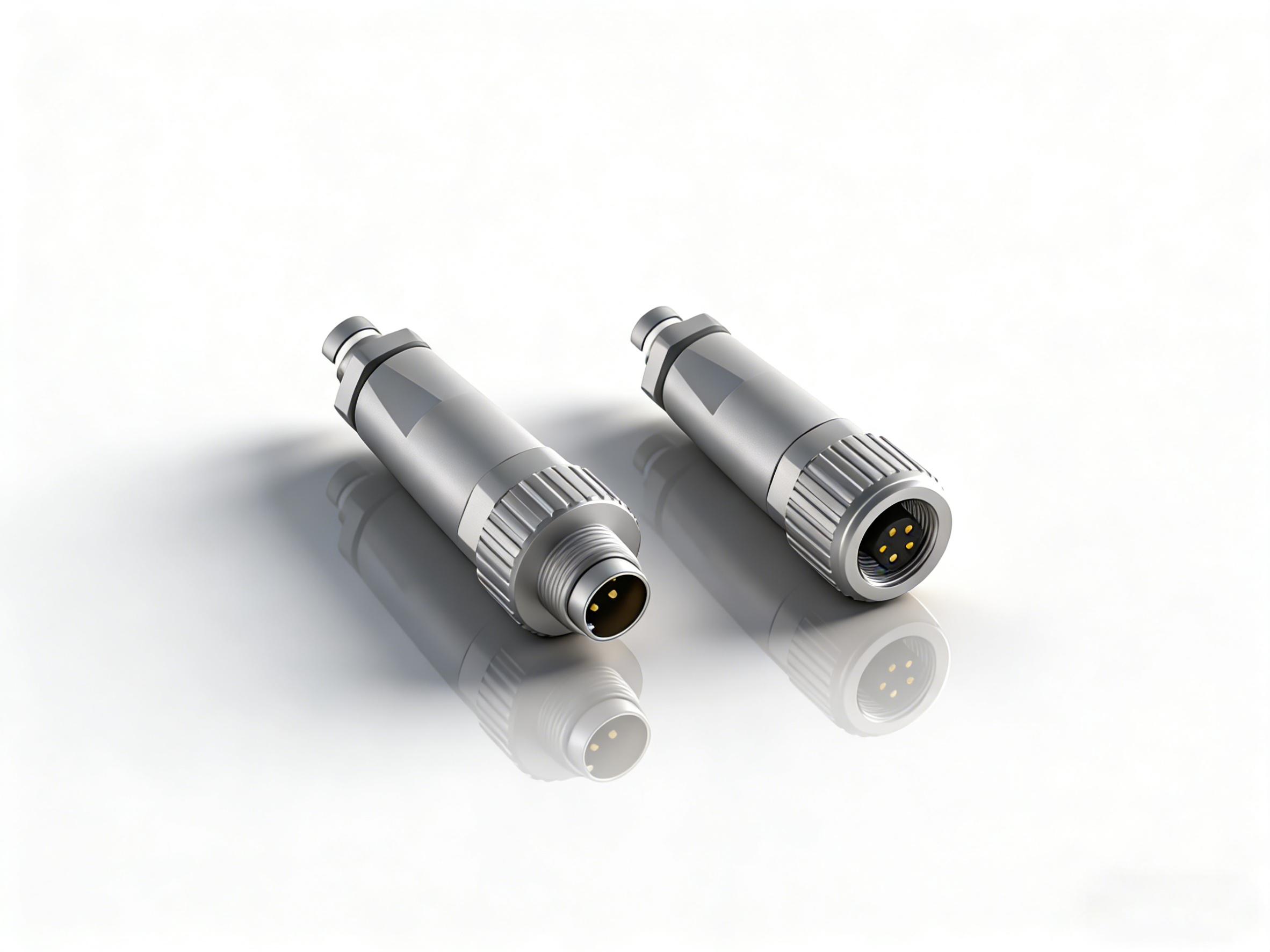
9mm Thread Diameter
Total length only 25–40mm, weighing 12–15g—about 30% smaller than M12.
A-Coding for Polarization
Full range of 2–8 pins, preventing mis-mating.
Flexible Mounting
Supports front/back panel mount and cable connection.
2. Key Specs to Check Before You Choose
- Protection: Standard IP67 (dustproof, immersion up to 1m for 30 min), customizable to IP68.
- Temperature: −40°C to +85°C, suitable for outdoor cabinets and workshops.
- Electrical: Rated 125V, current 1A–4A by pin count (fewer pins carry more); contact resistance ≤10mΩ, insulation resistance ≥100MΩ, some models with 360° shielding against EMI.
- Durability: Threaded locking + anti-loosening, 500+ mating cycles, vibration resistance per EN 61373.
- Material: Housing in nickel-plated brass (corrosion-resistant) or engineering plastic (lightweight, insulated).
3. Five Steps to the Right M9
01 Count the Pins
Power + a few signals → 2–5 pins (higher current). Multiple low-current signals, dense wiring → 6–8 pins. Don't overpay for extra pins, nor force-parallel on too few.
02 Check Protection
Indoor dry environment → basic sealing is enough. Outdoor, spray, or oil exposure → IP67 required, IP68 if necessary.
03 Decide the Form
Straight-line routing → straight. Tight space → right-angle. Instrument panel → panel mount (front or back).
04 Choose the Termination
Fixed equipment, reliability first → solder. Fast assembly → crimp. Dense PCB → SMT surface mount.
05 Pick the Housing
Industrial site, corrosion resistance → nickel-plated brass. Inside instruments, lightweight insulation → engineering plastic.
4. Quick Reference Table
| Your scenario | Recommendation |
|---|---|
| Power + few signals | 2–5 pins (higher current) |
| Multiple low-current signals, tight space | 6–8 pins |
| Outdoor / spray / oil | IP67, IP68 if necessary |
| Instrument panel, easy maintenance | Panel mount (front) |
| Inside equipment, limited routing | Right-angle / back panel mount |
| Dense PCB soldering | SMT surface mount |
| Industrial site, corrosion resistance | Nickel-plated brass housing |
5. Four Common Pitfalls
Pin count only, ignoring current/voltage
Small spec under high load causes interference or even burns the connector and damages sensors.
One-size-fits-all protection
Forcing IP67 indoors wastes budget; choosing low protection outdoors risks water ingress and loose contacts.
Form not matching the mating part
Non-standard threads or cheap latches instead of the European screw-lock loosen, strip, or drop off under vibration.
Ignoring material durability
Ordinary plastic housing and copper contacts in high-temp oily environments crack, oxidize, and lose contact.
6. Where They're Used
Robot joints use right-angle M9 to avoid cable tangling; machine tool panels use board-end M9 to save space. Automotive engine bays, ADAS modules and other high-temp vibration scenarios have automotive-grade versions (IATF 16949 compliant). Base station outdoor cabinets rely on IP67 and EMC to keep signals clean amid interference. After one auto parts maker switched to M9, equipment failure rate dropped 30% and maintenance cost dropped 25%.
Still unsure which to choose?
Send us the five items—pin count / gender / mounting form / termination / protection rating—and we'll give you selection advice and sample testing.
Website: www.octopusconn.cn
This article's parameters and application cases are compiled from Octopusconn's official website public information (octopusconn.cn), as of August 2026; specific models are subject to the official datasheet.
 telephone
 Contact US