
Circular Connectors vs Rectangular Connectors: Which Is More Suitable for Industrial Applications?
In the deep advancement of Industry 4.0 and intelligent manufacturing, connectors serve as the core hub for power and signal transmission between equipment. Their selection directly determines the stability and reliability of system operation. Circular connectors and rectangular connectors are the two most widely used structural types in the industrial field. Due to different design principles, they have significant differences in environmental adaptability, mechanical performance, transmission capability and scenario positioning. This article conducts a professional comparison from multiple dimensions to provide a clear reference for connector selection in industrial scenarios.
1. Fundamental Structural Differences: Shape Determines Core Characteristics
The shape of a connector is not a matter of design preference, but a functional choice based on mechanics and sealing principles.
1.1 Circular Connectors
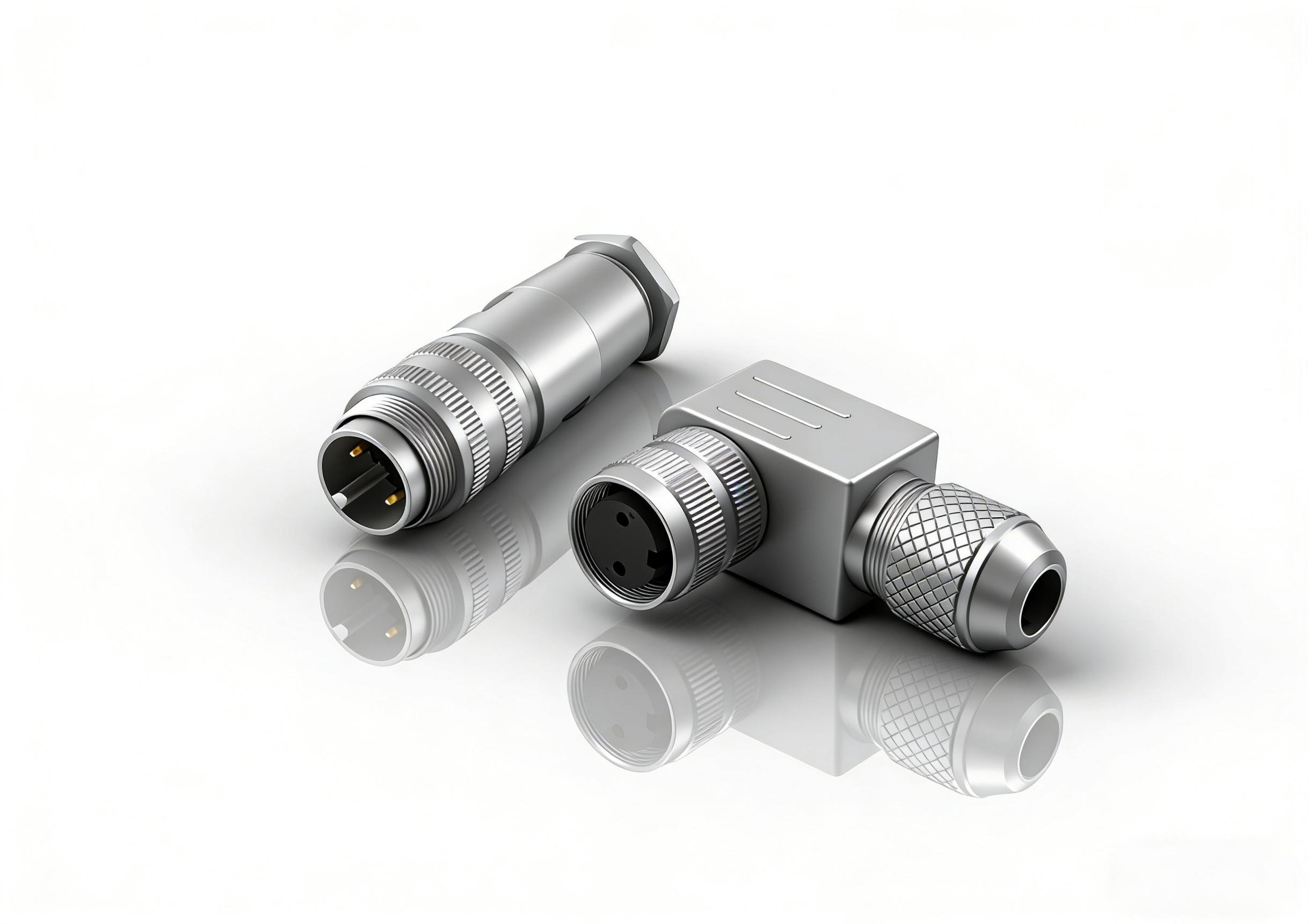
Circular connectors take a cylindrical structure as the core base, with contacts symmetrically distributed along the central axis. They mostly adopt threaded, snap-in or quick-plug locking mechanisms.
- Structural advantages: The circumferential symmetric design distributes force evenly, delivering inherently excellent vibration and impact resistance. The circular sealing surface is easy to process with high precision, and can achieve high-level waterproof and dustproof performance when matched with sealing rings.
- Typical representatives: Standardized circular connectors such as the M-series (M5, M8, M12, M16) and 7/8'' widely used in the industrial field.
1.2 Rectangular Connectors
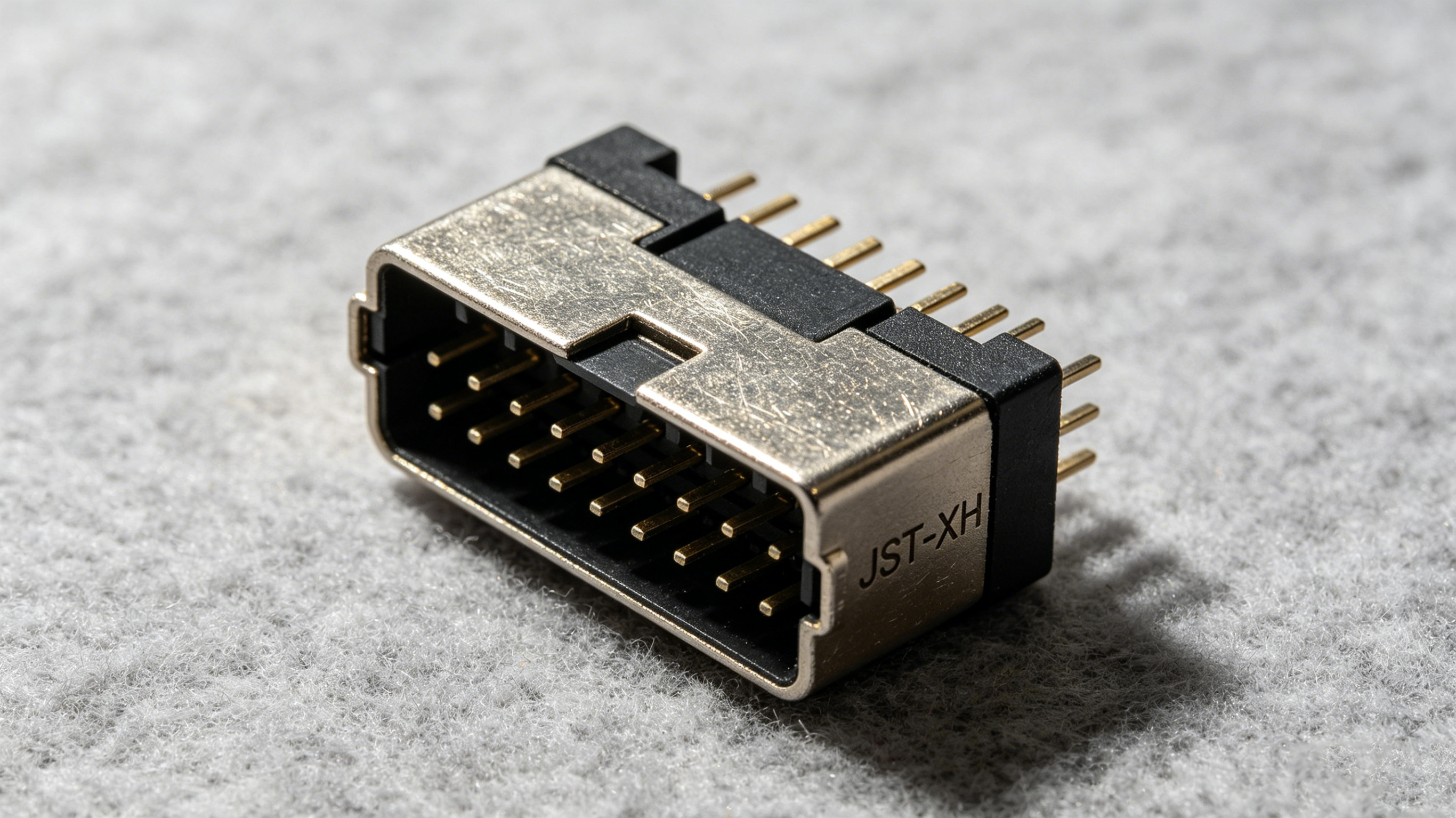
Rectangular connectors adopt a cuboid base, with contact pins arranged in a matrix. They are mostly fixed by side snaps, rotary handles or locking levers.
- Structural advantages: The planar arrangement can accommodate more cores in a limited space, achieving higher space utilization. They are neatly arranged when installed on panels, suitable for high-density interface integration.
- Typical representatives: Heavy-duty connectors, D-Sub connectors, board-to-board connectors inside cabinets, etc.
2. Comparison of Core Performance in Five Dimensions
2.1 Protection Performance and Environmental Adaptability
This is the core indicator for industrial scenario selection, which directly determines whether equipment can operate stably in harsh environments.
- Circular connectors: The circumferential sealing structure is inherently suitable for waterproof and dustproof design. Mainstream products in the industry generally reach IP65 and IP67 protection levels, and some special models can achieve higher protection. Meanwhile, the metal shell has excellent corrosion resistance and weather resistance, and can be directly applied to harsh working conditions such as outdoor, humid, dusty and oily environments.
- Rectangular connectors: Due to multiple splicing gaps and edges, it is more technically difficult to achieve high sealing. Conventional products mostly have protection levels between IP40 and IP65, and higher protection requires special customization. Most are more suitable for relatively mild environments such as inside cabinets and dry indoor spaces.
2.2 Mechanical Performance and Connection Reliability
Vibration, impact and frequent plugging and unplugging on industrial sites are the main causes of connector failure.
- Circular connectors: The threaded locking mechanism has a firm bite, outstanding tensile and vibration resistance, and can withstand continuous vibration and instantaneous impact during long-term equipment operation. Meanwhile, the cylindrical contacts have high coaxiality, uniform wear during plugging and unplugging, and longer mechanical life. Taking industrial M12 connectors as an example, the standard plugging life can reach thousands of times, suitable for motion scenarios such as industrial robots, AGVs and rail transit.
- Rectangular connectors: The locking force is mostly concentrated on the side snaps, and there is a risk of loosening in vibration environments. The matrix arrangement of pins requires high alignment accuracy for plugging and unplugging, making blind plugging difficult. Misalignment can easily cause bent and damaged pins, making them more suitable for fixed installation scenarios with low plugging frequency.
2.3 Transmission Performance and Anti-interference Capability
With the popularization of industrial Ethernet and high-frequency signals, transmission capability has become an important selection criterion.
- Circular connectors: The shielding structure is maturely designed, and the 360° fully enclosed metal shielding layer can effectively resist electromagnetic interference (EMI) and radio frequency interference (RFI), ensuring stable signal transmission. They can also realize mixed transmission of power, signals and data. Among them, high-end M12 and M16 connectors already support 10Gbps high-frequency data transmission, and can perfectly adapt to industrial Ethernet protocols such as PROFINET and EtherCAT.
- Rectangular connectors: Their advantage lies in multi-core parallel transmission, suitable for centralized wiring of a large number of low-voltage signals. However, high-frequency performance is limited by the structure, and the shielding integrity is weaker than that of circular connectors. Signal attenuation and crosstalk are prone to occur in high-speed transmission scenarios.
2.4 Installation, Maintenance and Wiring Flexibility
- Circular connectors: On-site assembly is simple and convenient. Threaded locking does not require precise alignment, and has a high fault tolerance for blind plugging. Cables can be routed in any 360° direction, adapting to complex wiring spaces inside equipment, with low later maintenance and single product replacement costs. They have a high degree of standardization, and products of the same specification have strong interchangeability, facilitating supply chain management.
- Rectangular connectors: They are neatly and beautifully arranged during panel installation, and can save installation space in high-density interface scenarios. However, they require high pin alignment, accurate alignment during installation, and relatively difficult on-site maintenance. Moreover, specifications vary greatly among different manufacturers, with weak interchangeability.
2.5 Cost and Standardization Degree
- Circular connectors: International general standard systems such as the M-series are mature, with a complete industrial chain, and general models have high cost performance. Special customized models have relatively higher costs.
- Rectangular connectors: There are various specifications and categories, with a high proportion of non-standard customization, and the overall procurement and maintenance costs are relatively high. However, the single-core cost has certain advantages in scenarios with a very large number of cores.
3. Scenario Adaptation: Selection Principles for Different Working Conditions
There is no absolute advantage or disadvantage in connector selection; the core lies in the matching degree with the application scenario.
Scenarios Where Circular Connectors Are Preferred
- Industrial automation sites: Equipment connection such as sensors, actuators and industrial cameras, as well as PROFINET and EtherCAT bus network wiring, are the core application fields of M12 and M8 circular connectors.
- Harsh outdoor environments: Scenarios requiring waterproof, dustproof and strong weather resistance such as new energy charging piles, outdoor testing equipment, engineering machinery and security monitoring.
- High-vibration motion equipment: Working conditions with continuous vibration such as industrial robot joints, AGV trolleys, rail transit vehicles and automated production lines.
- High-cleanliness/water-washing scenarios: Scenarios requiring regular washing and high protection levels such as food and beverage production equipment and medical equipment.
Octopusconn's full series of industrial circular connectors cover mainstream specifications from M5, M8, M9, M12, M16 to 7/8'', with IP67 protection level and CE and FCC certifications. They support multiple coding designs such as A-coding and D-coding, feature vibration resistance and high & low temperature resistance, and can stably adapt to all the above harsh industrial scenarios.
Scenarios Where Rectangular Connectors Are Preferred
- Centralized wiring inside cabinets: Board-to-board and wire-to-board connections inside equipment such as PLC control cabinets, servo systems and power distribution cabinets.
- High-density signal transmission: Scenarios requiring parallel transmission of a large number of signals such as test and measurement instruments, communication equipment and data centers.
- Flat space installation: Application scenarios with thin equipment, highly integrated panel interfaces and relatively mild environments.
4. Core Decision-Making Logic for Industrial Selection
- Environment priority: First judge whether there are harsh conditions such as water, dust, vibration and corrosion in the application environment. Circular connectors are preferred for harsh environments.
- Performance matching: Circular connectors with excellent shielding performance are preferred for high-speed data transmission and strong electromagnetic interference scenarios; rectangular solutions can be considered for a large number of low-speed parallel signals.
- Mechanical requirements: Circular connectors are preferred for frequent plugging and unplugging, moving parts and high-impact scenarios; rectangular connectors can be selected as needed for fixed installation and low plugging frequency.
- Standardization principle: Prioritize the selection of international general standard series to ensure interchangeability and reduce long-term maintenance and supply chain costs.
- Comprehensive cost: Consider not only the unit purchase price, but also the full life cycle costs such as installation cost, maintenance cost and downtime loss due to failures.
Conclusion
Circular connectors and rectangular connectors are not alternatives to each other, but scenario-based solutions based on different design logics. Among them, circular connectors have become the mainstream choice for harsh environments on industrial sites by virtue of their excellent protection performance, mechanical reliability and anti-interference capability; while rectangular connectors play an irreplaceable role in high-density and mild in-cabinet scenarios.
Octopusconn has been deeply engaged in the field of industrial circular connectors. Relying on more than ten years of R&D and manufacturing experience, it provides one-stop connection solutions from standard products to custom wiring harnesses. Its products are widely used in core fields such as industrial automation, intelligent manufacturing, rail transit and new energy. With the product philosophy of "Precise Connection, Stable and Reliable", it escorts the stable operation of industrial equipment for global customers.
 telephone
 Contact US