
Comparison of Connector Surface Treatment Processes (Gold‑plating / Tin‑plating / Silver‑plating)
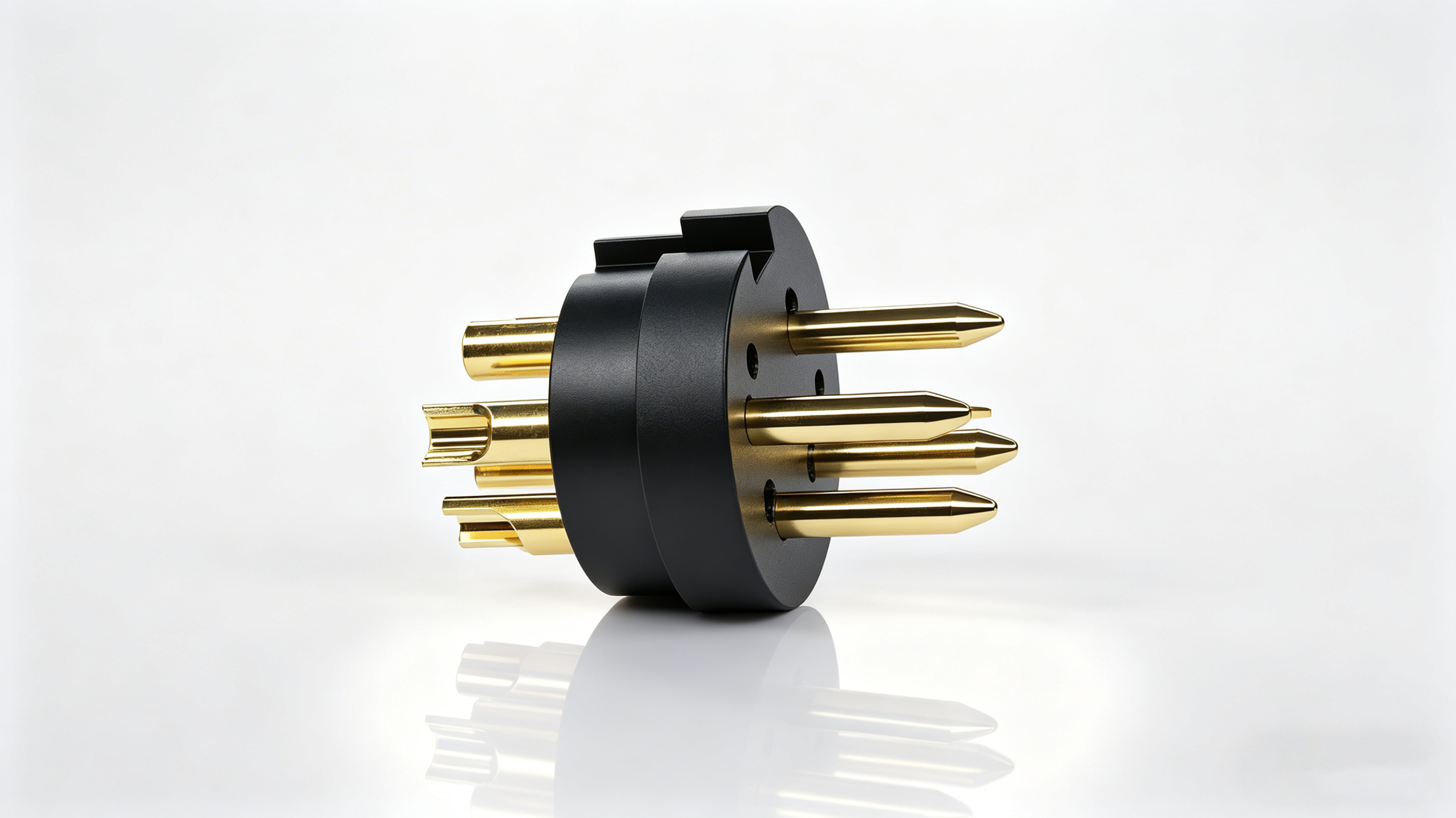
The long-term reliability of a connector largely depends on the plating on its contact surfaces. This article compares the characteristics and use cases of three mainstream finishes—gold, tin, and silver plating—and illustrates real-world selection using Octopusconn's industrial circular connectors as an example.
01 The Role of Plating
- Prevents base-metal oxidation and keeps contact resistance stable;
- Blocks moisture, salt spray, and oil, providing corrosion protection;
- Increases surface hardness to withstand repeated mating cycles without performance degradation.
02 Three Finishes Compared
Gold Plating
Best oxidation and corrosion resistance, with low and stable contact resistance. Highest cost; typically applied as a composite "gold over nickel" layer. Suited for high-frequency, high-reliability, and low-signal applications.
Tin Plating
Lowest cost and good solderability. Prone to oxidation film; requires higher contact force for reliability and is not ideal for high-frequency signals. Suited for general high-current, cost-sensitive applications.
Silver Plating
Best electrical and thermal conductivity, with minimal high-frequency skin effect. Reacts with sulfides to form black silver sulfide (insulating); requires protection in high-sulfur environments. Suited for high-current and RF applications.
At a glance: Gold = stable · costly · high-frequency & high-reliability | Tin = economical · oxidizes easily · general high-current | Silver = fast · sulfur-sensitive · high-current / RF
03 Octopusconn's Approach
The Octopusconn M16 series circular connector (model MC16NM-05F2LSLNS401), per published specifications: contacts are gold-plated copper , with a nickel-plated copper shell, IP67, operating temperature −40~85℃, mating life >500 cycles, contact resistance ≤5mΩ, flammability V0 (UL 94).
The Octopusconn M series targets demanding environments such as industrial automation, rail transit, and new energy. The M12 X-coded supports 10Gbps high-speed transmission (EN 61076-2-101, 360° shielding). For high-frequency, high-reliability requirements, it adopts a "gold-plated contacts + nickel-plated shell" solution.
04 Selection Guide
- High-frequency / high-speed signal → gold;
- High current, cost-sensitive → tin;
- High current with high-frequency needs → silver (sulfur protection required);
- Harsh industrial environment, long life → gold + nickel-plated shell (e.g., Octopusconn M series).
05 Conclusion
No finish is universally optimal—only the most suitable. Select based on four factors: signal frequency, current, environment, and cost.
For tailored selection advice, contact the Octopusconn technical team.
 telephone
 Contact US